Nigeria’s Most Comprehensive Study on Students, Digital Work, and the Future of Talent.
Nigerian students are working, freelancing, building companies, and learning employable skills well before graduation. Yet policies, social perception, and structural gaps still limit their access to opportunity. Across campuses, something has shifted. Students are no longer waiting until after school to participate in the economy. They freelance between lectures, build startups from hostels, and earn income online alongside their degrees. To understand this shift, we surveyed over 4,000 students across 55 tertiary institutions in 29 states. We asked how they work, what they earn, the skills they are learning, and the challenges they face balancing school, income, and life. What we found reveals a generation already working at the edges of the economy, without the systems designed to support them.
State of Student Work At a Glance
2 in 3 Nigerian students are actively involved in digital work
1 in 4 Nigerian students is an entrepreneur
Nearly half of Nigerian student workers have 3+ years of work experience before graduation.
60% of student workers earn below ₦100,000 monthly despite active work
42% of Nigerian students contribute financially to their families
Infrastructure, not skill, is the biggest barrier to productivity
9 in 10 active student workers plan to continue working after graduation
CHAPTER ONE: Employment and Earnings
We surveyed over 4,000 students to see what they were currently up to. More than 9% of respondents said they are actively employed.
We asked Nigerian Students who they worked for.
17%
Foreign company/Individual
43%
Nigerian company/Individual
40%
Both
Less than 1 in 5 respondents reported working exclusively with foreign employers.
What kind of fields do Nigerian Students work in?
Only one in five students work in tech-specific roles, while the majority thrive in adjacent fields.
How many years of experience do Nigerian student workers have?
1 in 2 active student workers have at least 3 years of work experience, and more than 3 in 4 student workers have been active for two years or more.
2%6 Years
7%5 Years
15%4 Years
21%1 Year
29%2 Years
26%3 Years
How much do Nigerian Students make?
Over 60% of student workers earn below ₦100,000.
61%
Less than 100k
23%
100k - 200k
10%
200k - 350k
4%
350k - 500k
2%
>500k+
When we asked Nigerian Students why they choose to work,
3 out of 10 student workers say they’re doing it for the love of the game
CHAPTER TWO: ENTREPRENEURSHIP
One in four Nigerian Students is a business owner.
What businesses do Nigerian Students run?
44%
E-commerce
25%
Service-based business
22%
Trading
5%
Content Creation
4%
Drop-shipping/Affiliate Marketing
37% of student entrepreneurs run online retail or product-based businesses.
We asked Nigerian Students when they started their businesses.
300 level students are most likely to start a businesss
9%
100L
16%
200L
30%
300L
24%
400L
10%
500L-700L
11%
After Graduation
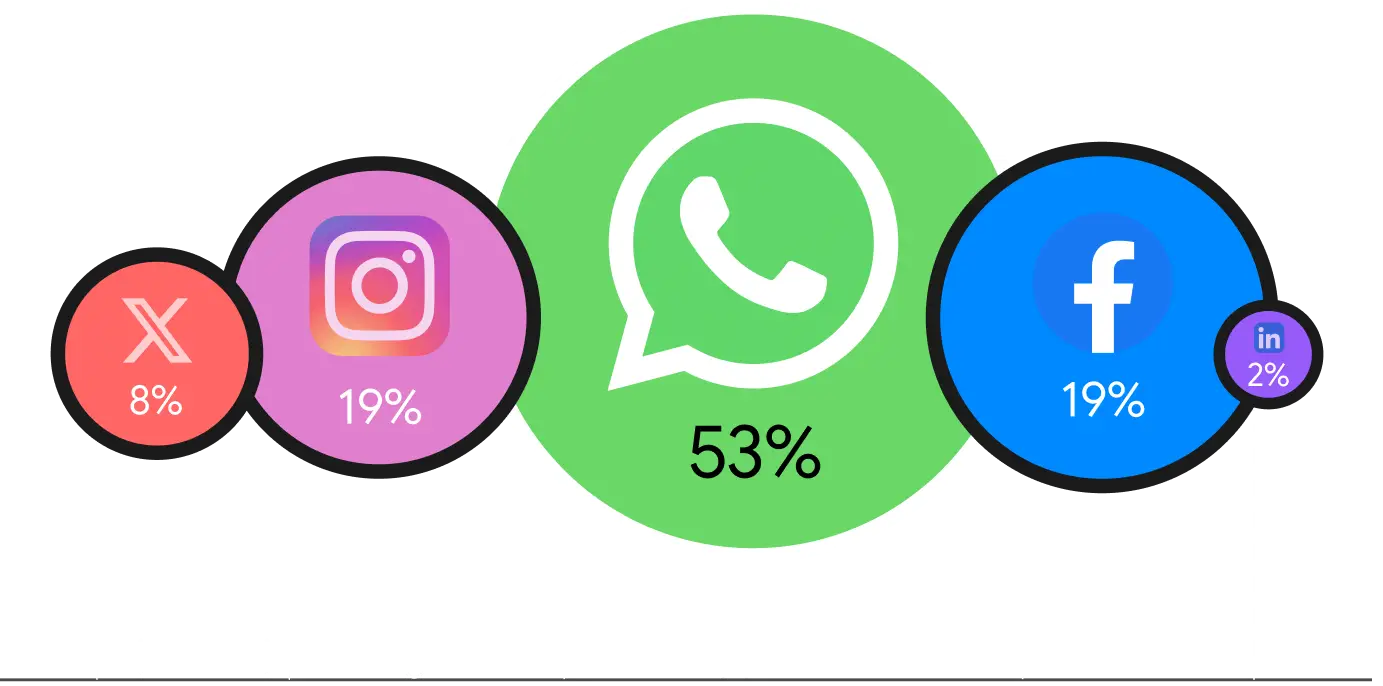
We asked Nigerian Students where they mostly conduct their business,
More than half of student entrepreneurs swear by WhatsApp
8%
X(Twitter)
18%
Instagram
53%
Whatsapp
19%
Facebook
2%
LinkedIn
When we asked Nigerian Students if they would continue running their businesses after graduation,
An overwhelming majority expressed the desire to keep running their businesses after graduation
96%
YES
4%
NO
CHAPTER THREE: Startups
In a class of 20 Nigerian Students, at least one is a startup founder.
We asked Nigerian Students what kind of startup they're building.
7%
Logistics / Fintech
14%
Health Tech
27%
Food
13%
Crypto / Web3
15%
Ed-Tech
11%
Agritech
3%
Others
More than half our respondents are building startups targeting SDGs 2, 3, and 12.
SDG 2: Zero Hunger – End hunger, achieve food security, improve nutrition, and promote sustainable agriculture. SDG 3: Good Health and Well-being – Ensure healthy lives and promote well-being for all at all ages. SDG 12: Responsible Consumption and Production – Ensure sustainable consumption and production patterns
What are they building?
For many students, startups are not purely profit-driven; they often emerge from personal passions or social missions.
45%
Non-profit Organization
43%
Tech startup
12%
Niche Community
We asked Nigerian Students how they fund their startups.
Only 18% of respondents reported accessing external funding through grants, angel investors, and venture capital.
Family and Friends
Savings
Grants, angel investors, and venture capital
Another business’s profits
Salary
Loans
5%
8%
13%
18%
27%
29%
How much do student-led startups earn?
77%
Less than 100k
14%
100k - 200k
5%
200k - 350k
2%
350k - 500k
2%
500k+
An overwhelming majority of respondents earn less than ₦100,000 per month.
What challenges do startups face?
Nearly half of our respondents reported that funding was their biggest challenge
Funding
Marketing and customer retention
Infrastructure (electricity & internet)
Lack of mentorship
Government policies
Logistics (waybilling goods and supplies)
5%
8%
12%
13%
14%
48%
CHAPTER FOUR: Learning and Upskilling
One in four Nigerian Students is currently learning a digital skill.
We asked Nigerian Students what skills they are learning.
24.4%
Software Development
21.8%
Digital Marketing
16.3%
Product Design
12.8%
Data Analytics
8.5%
Photography and Video Editing
7.4%
Writing Services
5.7%
Social Media Management
3.1%
Machine Learning
High-demand digital skills are popular amongst Nigerian Students.
How long have Nigerian Students been learning digital skills?
7 in 10 active learners are yet to hit the 6-month mark in their learning journey.
47%
Less than 3 months
26%
3 - 6 months
13%
6 - 12 months
14%
More than 12 months
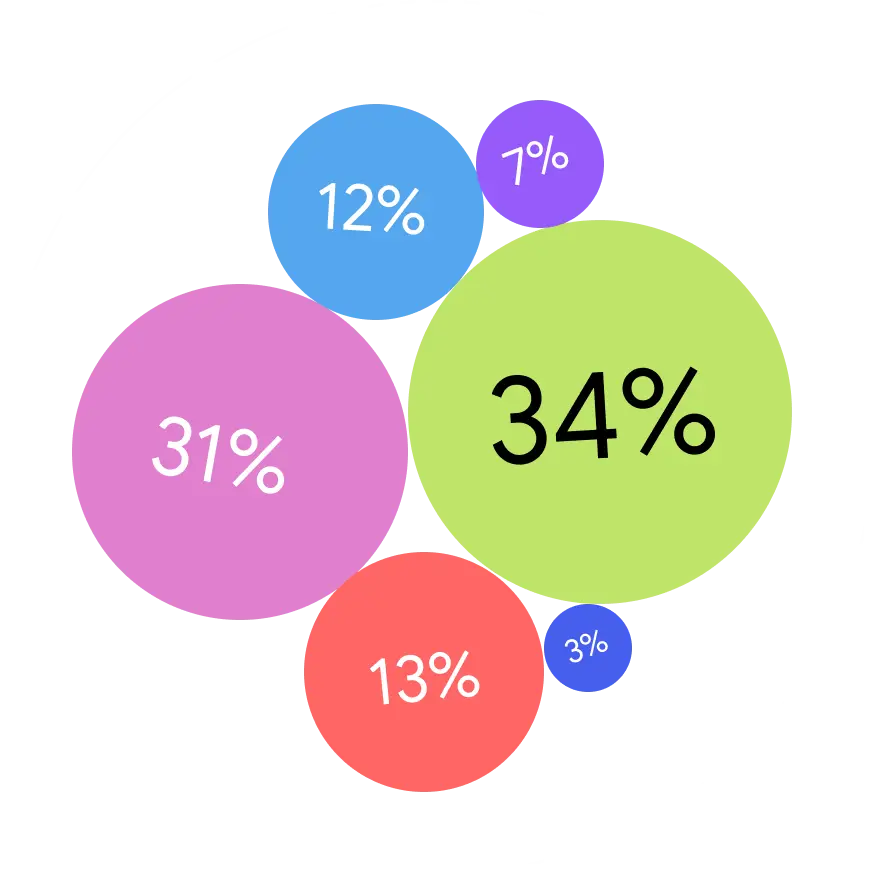
We asked Nigerian Students where they go to learn.
Free and on-demand resources are most popular amongst Nigerian Students due to their flexibility and affordability
Youtube Tutorials
Online Courses
Books or Ebooks
Online Communities
Coding Bootcamps
Podcasts
13%
3%
31%
34%
12%
7%
We asked Nigerian Students how much time they spend learning digital skills.
Nearly 1 in 2 learners spend over 5 hours a week learning a digital skill.
51%
Less than 5 hours
35%
5 - 10 hours
9%
10-15 hours
5%
> 15 hrs
We asked Nigerian Students where they go to learn.
A vast majority of our respondents use completed projects, quizzes and assignments to measure their progress.
47%
Completing Projects or Assignments
25%
Taking assessments or quizzes
17%
Receiving Feedback from peers or instructors
11%
Tracking milestones or goals
What challenges do learners face?
The biggest obstacles to learning are familiar: poor internet, unreliable power, and limited access to conducive workspaces.
32%
Poor Internet Connection
22%
Lack of Internship Opportunities
19%
Epileptic Power Supply
18%
Uncomfortable workspace
9%
No Community
CHAPTER FIVE: School, work, life balance
To understand how Nigerian students cope with the increased burden that comes with digital work, we asked our respondents to rate their work-life balance.
How do students rate their work-life balance?
6.1%
1 Star
14.7%
2 Stars
46.3%
3 Stars
22.5%
4 Stars
10.4%
5 Stars
Most students believe they are managing things reasonably well. When asked to rate their sense of balance, the majority placed themselves somewhere above average, suggesting that while the load is heavy, they have found ways to keep moving.
What influences students’ work-life balance?
49%
The work itself
43%
The course I’m studying
8%
The courses I take
What effects does digital work have on students?
Over half of our respondents have reported insomnia and social media addiction as side effects of digital work.
4%Anxiety, Depression
7%Zero social life
8%Eye defects
13%Back pain
29%Social media addiction
39%Insomnia
How do Nigerian Students cope with stress and burnout?
An overwhelming majority of our respondents rely on the oldest known medicine - sleep.
20%
Sleep
16%
Take a break
14%
Watch a movie
13%
Music
12%
Get food
11%
Social media
8%
Hang out with friends
6%
I power through it
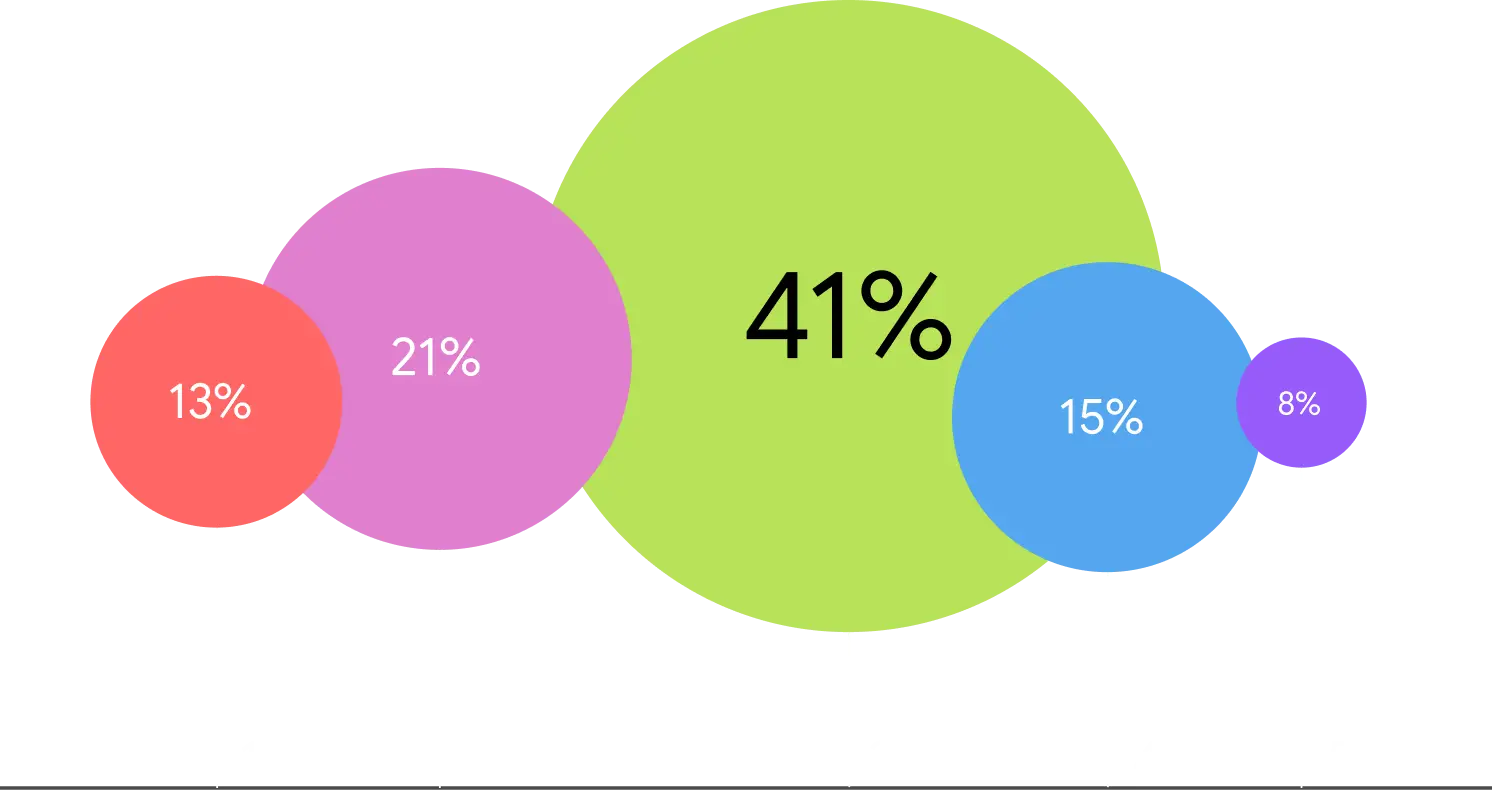
How satisfied are students with their current life trajectory?
Measuring satisfaction is never simple, especially in a country where economic and academic conditions shift constantly. Still, most respondents described themselves as moderately satisfied with the direction their lives are taking. The sense of progress, however small, is what keeps many of them motivated.
13%
1
23%
2
41%
3
15%
4
8%
5
We asked Nigerian Students how hopeful they are about the future.
If there’s one thing that stands out from this study, it is hope. Nearly two-thirds rated their optimism at the highest level.
2.6%1
3.2%2
11.8%3
17.7%4
64.7%5
CHAPTER SIX: Future Aspirations
We wanted to understand if Students' current digital pursuits were just placeholders until they could pursue their dream careers upon graduation. For some, the degree is the placeholder.
We asked Nigerian Students how well their degree relates to their current digital career.
Over 3 in 5 respondents reported that their major is related to their current digital career
Do they plan to continue their current digital work endeavors after graduation?
Most respondents plan to continue with their digital careers after graduation
69% Yes
16% Maybe
9% I'd explore
6% No
We asked Nigerian Students if they intend to practice in their current field of study?
An overwhelming majority preferred to keep their surface area for success as wide as possible.
74%
Yes
19%
Maybe
7%
NO
CHAPTER SEVEN: Support and Acceptance
To understand the role that parents and immediate family play in career choices, we asked our respondents to describe their families' reactions to their extra-curricular pursuits.
Did anyone actively stop you from learning a skill?
81%
NO
19%
YES
The overwhelming majority of our respondents said no one had stood in their way.
Which family member provides the most support?
When it comes to moral and financial backing, mothers lead the way. Nearly a quarter of respondents said their mothers were the most supportive of their career or skill-learning pursuits.
5.7%Aunt
7.4%Cousin
8.5%Uncle
12.8%Younger Siblings
13%Older Siblings
21.8%Father
30.8% Mother
This suggests that emotional proximity plays a stronger role than traditional hierarchies in determining who supports students’ aspirations.
5.7%
7.4%
8.5%
12.8%
13%
21.8%
30.8%
The positive sentiment from immediate family does not always transfer to the outside world.
Among those we surveyed, 1 in 5 said that their friends, neighbours, or even some extended family members think they are fraudsters.
Nearly half of respondents said they have lost opportunities simply for being Nigerian. For digital workers who rely on global clients, that kind of prejudice hits differently.
Have you ever lost an opportunity because you were Nigerian?
47% Yes
53% No
Students often have to endure being underpaid, under-hired, or outright excluded for reasons unrelated to competence. Over a third of our respondents reported facing discrimination at work due to age, gender, or race.
Have you ever experienced discrimination at work (Gender, Race, Age)?
32% Yes
68% No
'Gen Z' is being used as a slur.
The term, once meant to describe a generation, now sometimes doubles as shorthand for unseriousness or entitlement.
Have you ever been called "Gen Z" as a slur?
27% Yes
73% No
CHAPTER EIGHT: The Students Who Sit Out
Not every student we spoke to was an entrepreneur or digital worker. Some, nearly a third of respondents, have chosen to stay out of both spaces, either by circumstance or deliberate choice.
Why aren’t you involved in digital work?
46.2%
Focusing on academic studies exclusively
25%
Unsure about interests or career goals
17.5%
Dealing with personal or family commitments
11.3%
Taking a break or sabbatical
For most respondents, their non-involvement could be attributed primarily to having a lot on their plate.
How do they finance their education and living expenses?
When asked how they meet their financial needs, the pattern was clear. Family remains the main source of funding, accounting for exceptions in 4 in 5 cases.
Financial exceptions from parents or family
Savings from previous earnings
Part-time job or internship
Scholarships or grants
2%
5%
7%
86%
Even among those currently uninvolved, interest in future opportunities remains strong. 3 out of 4 respondents said they plan to get involved in digital work at some point, and another third are considering it.
Are you open to opportunities for extra-curricular involvement in digital work?
78%
Yes
15%
I’m not sure yet
7%
NO
Conclusion
Nigerian students are no longer preparing for work in the future. They are already working, earning, and building skills while still in school. Across campuses, students are adapting to economic pressure with initiative and resilience, often without formal support or recognition. What limits their progress is not ambition or ability, but systems that have failed to keep up. To close this gap, six priorities stand out:
Expand access to digital infrastructure around campuses, especially reliable internet and power
Integrate work-based learning into higher education through internships, remote work, and entrepreneurship tracks
Create clear policy frameworks that allow safe, structured student employment
Strengthen mentorship and career networks to guide long-term growth
Invest in learning and work environments that reduce isolation and support collaboration
Protect digital workers through awareness, trust-building, and supportive policy












 2%6 Years



 5%
5%